⚠️ SAFETY NOTE: MICROWAVE LEAKAGE RISK
When you remove or replace a microwave door, you are handling the most critical safety barrier of the appliance. Unlike a standard oven door, a microwave door is designed to contain microwave radiation.
Hinge Alignment is Critical: If the hinges are not perfectly aligned during re-assembly, the door may not seat correctly against the frame. Even a tiny gap can allow microwave energy to leak out during operation.
The "Mesh" Integrity: Ensure the perforated metal screen on the inside of the glass is not bent, scratched, or damaged. This mesh is what reflects the microwaves back into the cavity.
Interlock Switches: The door interacts with safety "interlock" switches. If the door isn't aligned, the microwave might not start, or worse, it could operate with a partial seal.
Leakage Test: After any door repair, it is highly recommended to use a Microwave Leakage Detector (an inexpensive handheld tool) to ensure no radiation is escaping while the unit is running.
Whether you're replacing a cracked glass panel or a broken handle, removing the door is a necessary hurdle. It's often simpler than it looks, but requires accessing the hidden hinge mechanism behind the outer casing.
The Removal Process
Safety First: Disconnect the power and wait. As always with microwaves, ensure the high-voltage capacitor is discharged if you are opening the main chassis.
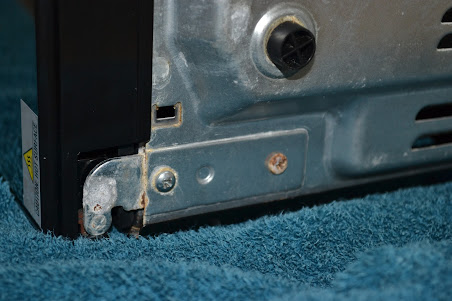
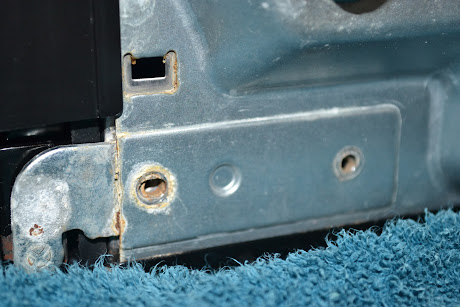
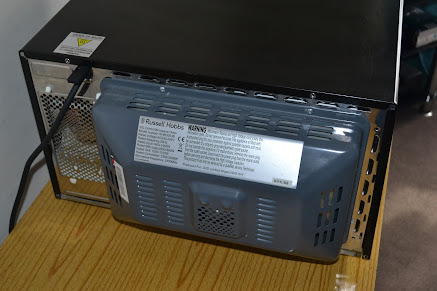
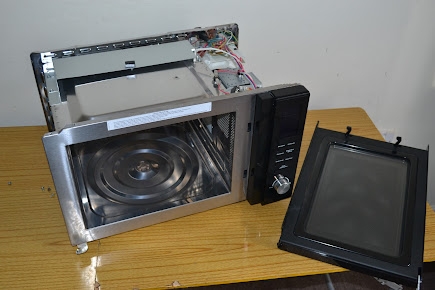
Access the Hinges: Most microwaves require you to remove the outer cover (usually held by 4-5 screws) to gain access to the upper hinge.
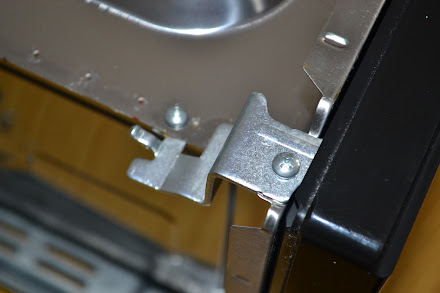
The Upper Hinge: Once the cover is off, locate the upper door hinge. It is typically held by two retaining screws. Undo these while supporting the door.
Lift and Release: Open the door slightly and lift it upward. On many models, the bottom is a simple "pull-away" pivot pin that doesn't require screws, allowing the door to slide free from the chassis once the top hinge is removed.

No comments:
Post a Comment