⚠️ SAFETY FIRST: IMPORTANT
Always isolate the appliance from the mains power before inspecting fan motors. Moving fan blades can cause injury, and the terminals carry high voltage. Ensure the oven has cooled down, as internal components near the fan can remain hot for a significant time after use.
In a modern fan-assisted oven, the fan is the "circulation system." It ensures that heat is distributed evenly throughout the cavity, reducing cooking times and energy usage. Most ovens feature two types of fans: the Circulation Fan (inside the cavity) and the Cooling Fan (above the chassis to protect the controls).
How Fan Motors Work
The vast majority of oven fans use Shaded Pole Motors. These are simple, reliable, single-phase AC induction motors.
The Benefit: They are rugged and can withstand the high-temperature environment of an oven.
The Circulation Fan: Spins at high speed to move air across the heating element and around the food.
The Cooling Fan: Pulls room-temperature air over the oven's exterior and control panel to prevent the chassis from becoming too hot to touch.
Testing and Common Issues
If your fan is noisy, slow, or not spinning at all, check the following:
Visual Inspection: Look for grease buildup, food debris, or loose insulation caught in the blades. Spin the blades by hand to ensure they move freely without rubbing.
Multimeter Resistance Test: Set your meter to Ohms.
Circulation Motor: Should typically read between 70–110 ohms.
Cooling Motor: Should typically read between 80–150 ohms.
Insulation Test: Check for continuity between the motor windings and the earth/chassis. Any reading here suggests a short circuit that will trip your RCD.
Symptoms of Failure
Excessive Noise: Usually caused by worn bearings or blades hitting debris.
Overheating Elements: If the fan stops, the heating element will often overheat and burn out because the air isn't moving fast enough to carry the heat away.
The fan is used to circulate the air inside the oven cavity, this evens out the temperature all round the oven cavity , which id in the cooking process reduces heat and energy needed.
Commonly the motors used are shaded pole motors which are single phase AC induction motors simple but reliable motors.
Buy cooker oven spares on Ebay UK here
Buy a good Multimeter on Ebay UK here
Common issues
A visual inspection will show if grease or food or other materials build up inside the mechanism or other things getting caught up in the rotor blades can all be common issues, these can slow the motor down and even create overheating in the motor and eventual breakdown.
To test the motor winding you will need to set your multimeter to ohms and test between the two motor winding terminals. 70-110 ohms is usually the range to expect , you can also test the motor winding to earth and insulation resistance test if required.

You can also do a visual inspection of the motor to look for damage or burning discolouring in the windings.
Its always wise to spin the blades as well to make sure they are not rubbing or making contact to anything which will cause a lot of noise when the fan kicks in.
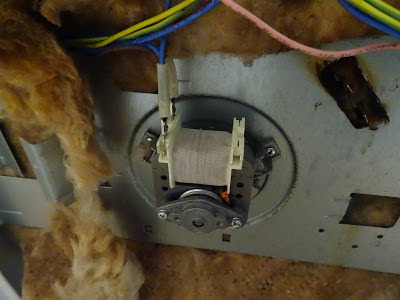
Cooling fans are used to cool the chassis of the oven so that any parts that are exposed to the touch are kept cool via cool air from the room and safe to touch. Cooling fans look different but the motors are usually the same type of shaded pole motor.
To test the motor winding you will need to set your multimeter to ohms and test between the two motor winding terminals. 80-150 ohms is usually the range to expect , you can also test the motor winding to earth and insulation resistance test if required. Visually inspect fan operation.


No comments:
Post a Comment