Gemini said
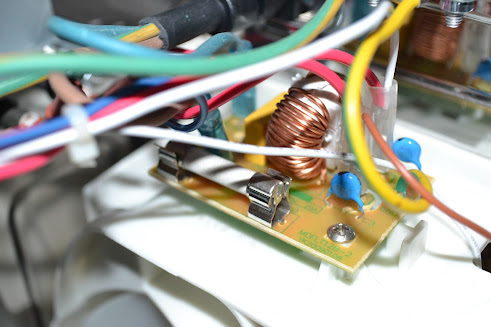
⚠️ Safety Note: Avoid the Capacitor
The capacitor is the most dangerous part of a microwave. It stores energy even when the unit is unplugged. Never open the case or begin testing until you are certain the capacitor is discharged.
** Warning avoid the capacitor inside these and do not open case with it plugged in**
When a microwave fails, it usually boils down to one of five common components. Knowing how to test these allows you to pinpoint the "broken link" in the circuit without guessing.
The Repair Checklist
The Main Fuse: The most common failure. Use your multimeter to test for continuity. If it’s blown, something caused it to "pop"—often a faulty door switch or a shorted capacitor.
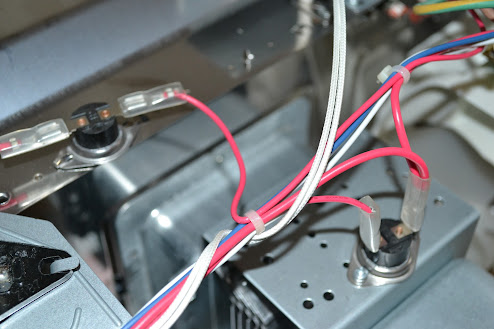
Thermal Cut-Outs (TCOs): These small sensors monitor the heat of the magnetron and the oven cavity. If they detect overheating, they open the circuit. Test for continuity; if they're "open," replace them.
Door Micro-Switches: Most microwaves use three switches to ensure the door is securely locked. They can fail mechanically or electrically. Test each switch in both the open and closed door positions using a continuity setting.
The Magnetron Heater: The magnetron is the heart of the microwave. You can test the heater terminals for continuity (should be a very low resistance) and ensure there is no continuity between the terminals and the metal casing (which would indicate a short).
High-Voltage Capacitor & Transformer: * Capacitor: Test for capacitance (e.g., 1 microfarad). DANGER: Ensure it is fully discharged before touching.
Transformer: Test the primary and secondary windings for continuity to ensure the high-voltage side is getting power.
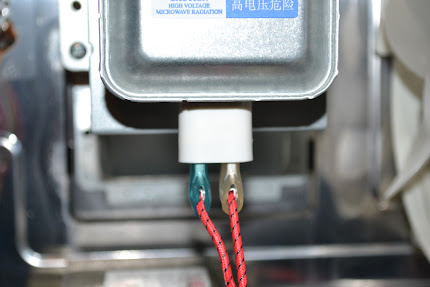
Another issue could be the heater on the magnetron
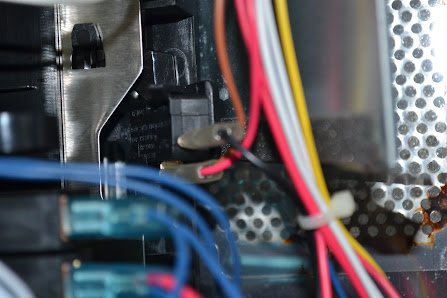
The doors usually have 3 micro switches


No comments:
Post a Comment